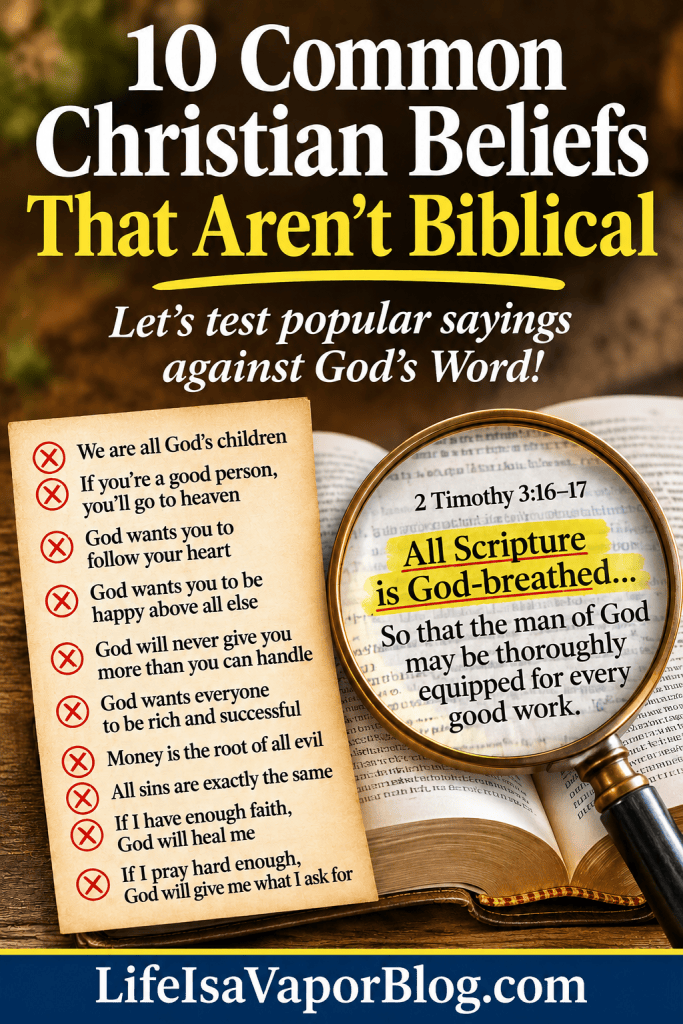
There are many things that Christians believe are biblical simply because they have heard them repeated so often. Some sound encouraging. Others seem to make sense. And some are even based on verses from the Bible—although those verses are often taken out of context or misunderstood.
The problem is that a belief doesn’t become biblical simply because Christians repeat it. We must examine what we believe in light of God’s Word, not interpret God’s Word in light of what we already believe.
The Bible commands us to test everything and hold fast to what is good (1 Thessalonians 5:21). The Bereans were commended because they examined the Scriptures daily to determine whether what they were being taught was true (Acts 17:11).
As Christians, we must do the same. Our authority is not popular opinion, personal experience, or what sounds right to us. Our authority is the Word of God.
Let’s examine ten common Christian beliefs that aren’t biblical—or that distort what Scripture actually teaches—and see what God’s Word says instead.
Related: 10 Essential Doctrines Every Christian Must Know (According to the Bible)
1. “We Are All God’s Children”
People often say, “We’re all God’s children” to emphasize that God loves everyone and all people have value. But is the statement biblically accurate?
God created all people in His image (Genesis 1:27), so every human being has dignity and value. In that sense, we are all God’s creatures. But Scripture distinguishes between being God’s creation and becoming His children through adoption in Christ.
John 1:12 says, “But to all who did receive him, who believed in his name, he gave the right to become children of God” (ESV). Those who receive Christ by faith are given this privilege. Paul makes the same distinction in Romans 8:14–17, describing believers as sons of God who have received the Spirit of adoption.
What should we believe instead?
Every person is created in God’s image and possesses inherent dignity. But becoming a child of God in the redemptive sense requires reconciliation with Him through Jesus Christ. We must be born again (John 3:3–7). The gospel is not that everyone is already right with God; it is the good news that sinners can be reconciled to Him through Christ. God’s kindness toward His creation should never be confused with the saving relationship He gives to those who belong to Christ.
2. “If You’re a Good Person, You’ll Go to Heaven”
Many people believe God will accept them into heaven because they have tried to live a good life. But Scripture teaches something very different.
Romans 3:23 declares that all have sinned and fall short of God’s glory. His standard is His own perfect holiness. James 2:10 explains that whoever keeps the whole law but fails in one point becomes accountable for all of it. We cannot establish our righteousness by pointing to the commands we have kept while ignoring the ones we have broken.
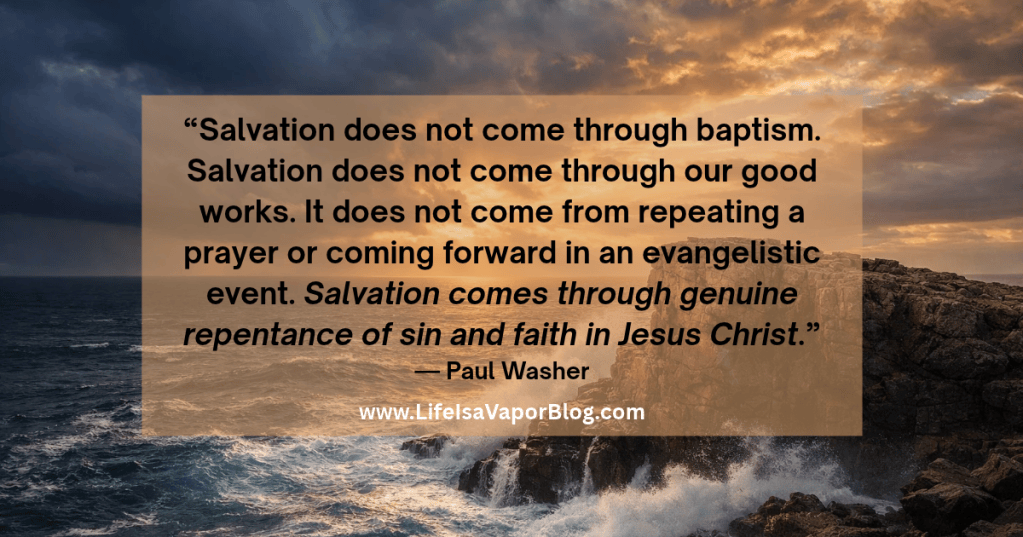
Thankfully, salvation does not depend on our ability to earn it. Ephesians 2:8–9 teaches that we are saved by grace through faith, not by works. Jesus lived the perfect life we could never live and offered Himself for sinners. Those who trust in Him are justified through faith (Romans 5:1).
Does this mean good works do not matter? Absolutely not. Ephesians 2:10 explains that believers are created in Christ Jesus for good works. Good works are the fruit of salvation, not the price we pay for it. They matter because they demonstrate the reality of a living faith, not because they earn God’s acceptance.
What should we believe instead?
No one earns heaven by being a good person. We need forgiveness and the righteousness God provides through Jesus Christ. We are saved by grace through faith, and genuine saving faith produces a changed life. The question is not whether you consider yourself good, but whether you have repented of your sin and placed your trust in Christ.
Related: Is God Angry With Sinners?
Related: How Can I know I’m Truly Saved? 6 Biblical Signs of Genuine Salvation
3. “God Wants You to Follow Your Heart”
“Follow your heart” is popular advice, sometimes repeated in Christian circles as though it were biblical wisdom.
But Scripture does not tell us to trust our hearts above everything else. Jeremiah 17:9 warns, “The heart is deceitful above all things, and desperately sick; who can understand it?” (ESV). Sin affects our thoughts and desires, and we can sincerely want something sinful. Proverbs 14:12 warns that a way can seem right to a person and still lead to death.
This does not mean every feeling is wrong. But emotions are not our ultimate authority; our feelings and desires must be evaluated in light of Scripture.
In Gethsemane, Jesus submitted Himself to the Father’s will, even as He faced the suffering of the cross (Luke 22:42). His example reminds us that obedience to God matters more than getting our own way.
What should we believe instead?
Rather than following our hearts, we must submit our hearts to God and allow His Word to shape our desires. Proverbs 3:5–6 calls us to trust in the Lord rather than lean on our own understanding. Romans 12:2 also calls believers to be transformed by the renewal of their minds so they can discern God’s will. The goal is not to pursue whatever feels right, but to become more like Christ, loving what God loves and rejecting what He calls evil.
4. “God Wants You to Be Happy Above All Else”
There is nothing wrong with enjoying God’s good gifts. Scripture speaks of joy and gratitude, but it never teaches that personal happiness is the highest priority of the Christian life.
Jesus warned His followers that following Him would involve self-denial. In Matthew 16:24–25, He says that anyone who would come after Him must deny himself, take up his cross, and follow Him. Obeying God may cost us something we deeply desire: forgiving someone who hurt us, leaving a sinful relationship, speaking unpopular truth, or remaining faithful through persecution.
Paul understood this. He endured beatings, imprisonment, hunger, and other hardships for the gospel (2 Corinthians 11:23–28), yet continued to rejoice in the Lord. His joy was rooted in God, not comfortable circumstances, and could coexist with suffering.
What should we believe instead?
God does not promise that we will always be happy according to the world’s definition of happiness. He calls us to seek His kingdom and righteousness first (Matthew 6:33). Our highest purpose is to glorify God and enjoy Him. Jesus promised His disciples joy as they abide in Him and obey His commands (John 15:10–11). Happiness must be shaped by our purpose of glorifying God, not placed above obedience.
Related: How to Seek Happiness in God
5. “God Will Never Give You More Than You Can Handle”
This saying is meant to comfort people in trials, but the Bible does not promise that God will never allow more suffering than we can personally manage.
This saying is usually connected to 1 Corinthians 10:13. However, Paul is writing about temptation, not suffering. God is faithful and provides a way to endure temptation.
Scripture gives examples of believers who experienced circumstances far beyond what they could handle in their own strength. In 2 Corinthians 1:8–9, Paul describes being afflicted so severely that he despaired of life itself. He says this happened so that he would not rely on himself but on God, who raises the dead.
God does not promise personal strength for every circumstance. He promises sufficient grace and power made perfect in weakness (2 Corinthians 12:9). Sometimes He delivers us; sometimes He sustains us. Either way, our trials are never outside His wise and loving care.
What should we believe instead?
Our hope is not in our ability to handle everything life brings. It is in God’s power, wisdom, and sustaining grace. When a trial feels unbearable, we can cry out to God, seek support from other believers, and trust Him to sustain us.
Related: God Is Working for Your Good
6. “God Wants Everyone to Be Rich and Successful”
The prosperity gospel teaches that God wants every Christian to be wealthy, healthy, and successful, often presenting material prosperity as evidence of strong faith.
But where does Scripture promise that every believer will be financially prosperous? It doesn’t.
God provides for His people, and wealth can be a blessing. But Scripture never guarantees material abundance to every Christian. First Timothy 6:6–8 teaches that godliness with contentment is great gain. If we have food and clothing, we should be content.
Paul also learned to be content in both abundance and need (Philippians 4:11–13). The familiar words “I can do all things through him who strengthens me” are not a promise that God will help us achieve any goal. In context, Paul is speaking about Christ giving him strength to remain content in every circumstance, including hunger and need.
Scripture also warns that the desire for wealth can lead people into temptation and destructive desires (1 Timothy 6:9–10). Our greatest treasure is Christ Himself.
What should we believe instead?
God calls us to seek His kingdom, practice contentment, work diligently, give generously, and use our resources for His glory. Wealth or poverty, by itself, does not prove the strength of a person’s faith. Our greatest treasure is Christ Himself.
7. “The Bible Says, ‘Money Is the Root of All Evil’”
People often misquote 1 Timothy 6:10 as saying, “Money is the root of all evil.” But the verse actually says: “For the love of money is a root of all kinds of evils” (ESV).
Money itself is not evil; it can be used for good or harm. The problem is loving money, trusting in it, and placing it above God.
In the surrounding passage, Paul warns that the desire to be rich can lead people into temptation and harmful desires (1 Timothy 6:9–10). Jesus warned that we cannot serve both God and money (Matthew 6:24). Wealth can easily become an idol when our security, identity, and hope rest in what we own.
What should we believe instead?
Money is not the root of all evil; the love of money is a root of many kinds of evil. We should be thankful for what God provides, guard our hearts against greed, and use our resources to serve God and others. Our trust belongs in the Lord, not in our possessions.

8. “All Sins Are Exactly the Same in God’s Eyes”
People sometimes say, “All sins are equal in God’s eyes” to emphasize that everyone is a sinner. That is true, but the statement is misleading if it means every sin has identical seriousness or consequences.
All sin is an offense against God. James 2:10 warns that whoever keeps the whole law but fails in one point becomes accountable for all of it. Every sin violates God’s holy standard; no one can stand before Him on personal righteousness.
However, Scripture also distinguishes between different degrees of guilt and judgment. In John 19:11, Jesus speaks of someone having the greater sin. In Matthew 11:20–24, He says judgment will be more bearable for some cities than for others. Luke 12:47–48 describes differing degrees of accountability according to what people knew and how they responded.
This does not excuse sin. It means sins are not identical in nature, consequences, or judgment.
What should we believe instead?
All sin is serious because God is holy, and every person needs His forgiveness. Yet Scripture does not teach that every sin is indistinguishable from every other sin. We must neither minimize sin nor compare ourselves with others. We all need God’s grace through Jesus Christ. The fact that all sin makes us guilty before God does not mean every sin carries the same earthly consequences or degree of judgment.
9. “If I Have Enough Faith, God Will Heal Me”
Christians should pray for the sick, and God is able to heal. But some teachers claim healing is guaranteed if a person has enough faith, suggesting continued illness proves a lack of faith.
This places an unnecessary burden on suffering people. Scripture does not promise that every Christian will be healed in this life.
Consider Paul’s experience. In 2 Corinthians 12:7–10, he describes a thorn in the flesh that he pleaded with the Lord to remove. God’s answer was not to remove it, but to tell Paul that His grace was sufficient and His power was made perfect in weakness.
We also read that Epaphroditus became seriously ill and nearly died (Philippians 2:25–27), and that Paul left Trophimus ill at Miletus (2 Timothy 4:20).
We should pray for healing and seek appropriate medical care. God can heal, but His ability to do so is not a promise that He will heal every believer.
What should we believe instead?
We should pray for healing with confidence in God’s power and goodness, while submitting to His will. Sometimes God heals; sometimes illness remains despite earnest prayer. Our faith rests in God’s character, not in a guarantee that He will grant every request as we desire. We must never assume that a suffering Christian is ill because he or she lacks faith. God’s grace is sufficient even when physical healing does not come. Our hope also includes the promise that one day He will make all things new and remove sickness and death forever (Revelation 21:4).
Related: Why Does God Allow Suffering? What the Bible Says About Pain and Evil
Resource: When Jesus Meets Disability Desiring God.org
10. “If I Pray Hard Enough, God Will Give Me What I Ask For”
Prayer is a wonderful privilege, and Scripture encourages us to pray persistently. But persistence does not mean that enough prayer will compel God to give us what we want.
Prayer is not a formula by which we can secure a desired outcome.
First 1 John 5:14 says that if we ask anything according to God’s will, He hears us. Biblical prayer brings our requests to God in trust and submission. James 4:3 warns that people sometimes ask with wrong motives, seeking to spend what they receive on their own pleasures.
Consider Jesus’ prayer in Gethsemane. He asked that the cup might pass from Him, yet submitted Himself to the Father’s will (Luke 22:42). Jesus also taught His disciples to pray, “Your will be done” (Matthew 6:10).
This does not mean persistent prayer is pointless. In Luke 18:1–8, Jesus teaches His disciples to pray always and not lose heart. We should bring our needs to God repeatedly, trusting His wisdom. Persistence does not give us control over Him.
What should we believe instead?
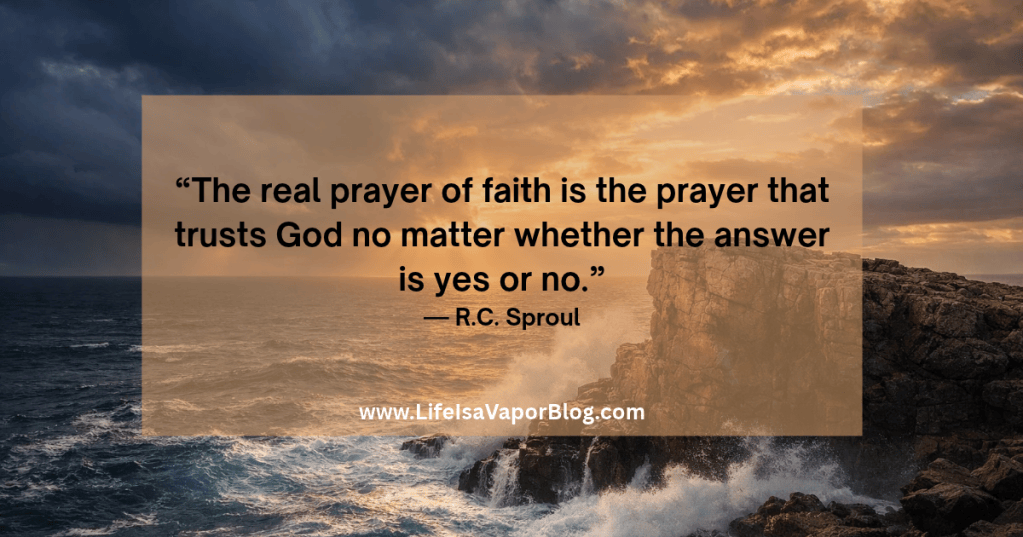
We should pray persistently, honestly, and expectantly, trusting God’s wisdom and submitting to His will. God is not a vending machine. Sometimes His answer is yes, sometimes no, and sometimes He calls us to wait. Our confidence rests not in how hard we pray, but in the God to whom we pray. He knows what is best for us, even when His answer is different from the one we hoped to receive.
Related: How Can I Know God’s Will for My Life?
Conclusion: Test Everything Against God’s Word
These ten beliefs illustrate why Christians must be careful about accepting popular sayings as biblical truth. Some are entirely absent from Scripture. Others distort a biblical teaching, take a verse out of context, or turn a general truth into a promise God never made.
The danger is not simply that we might repeat an inaccurate saying. The greater danger is that we might build our understanding of God, salvation, prayer, suffering, and the Christian life on something He has not actually revealed.
We must remember that God’s Word is the authority for what we believe, not popular opinion, personal feelings, or even statements repeated by well-meaning Christians.
The Bereans set an excellent example for us. When they heard the apostle Paul’s teaching, they examined the Scriptures daily to see whether what he said was true (Acts 17:11).
We should cultivate that same attitude. Rather than accepting a teaching because it sounds encouraging or because we have heard it our entire lives, we should ask, “Does the Bible actually teach this?”
When we encounter a familiar Christian saying, we should examine its meaning, look at the relevant passages in context, and compare the claim with the whole counsel of God.
Our goal is not merely to identify false beliefs. It is to know God more accurately, understand His Word more faithfully, and live in obedience to the truth He has revealed.
May we become Christians who love the truth enough to examine what we believe—and who are willing to abandon any belief that cannot stand up to the authority of Scripture.
Frequently Asked Questions
Are all popular Christian sayings unbiblical?
No. Some popular sayings accurately summarize biblical principles, while others are misquotations, oversimplifications, or teachings that Scripture does not support. Each statement should be evaluated according to its meaning and compared with the relevant passages in context.
How can I tell whether a Christian teaching is biblical?
Read the passages being used to support the teaching, paying attention to their context. Compare the interpretation with other relevant Scriptures, and consider whether the teaching agrees with the Bible’s overall message. Acts 17:11 provides an example of examining teaching against Scripture.
What should I do if I discover that I believe something unbiblical?
Be willing to correct your understanding. Study the relevant Scriptures, seek wise counsel from mature believers who take God’s Word seriously, and bring your beliefs into submission to what Scripture teaches. The goal is not to defend what we have always believed but to grow in our knowledge of God and His truth.
Why is biblical discernment important for Christians?
Biblical discernment helps Christians distinguish truth from error, recognize misleading teaching, and grow in spiritual maturity. Scripture warns believers not to be carried away by every teaching they encounter but to grow in the knowledge of Christ (Ephesians 4:14–15).
If this article was helpful, please share it!